
Calling Visa Explained: What Happens Before a Worker Travels to Malaysia?
Key Takeaway
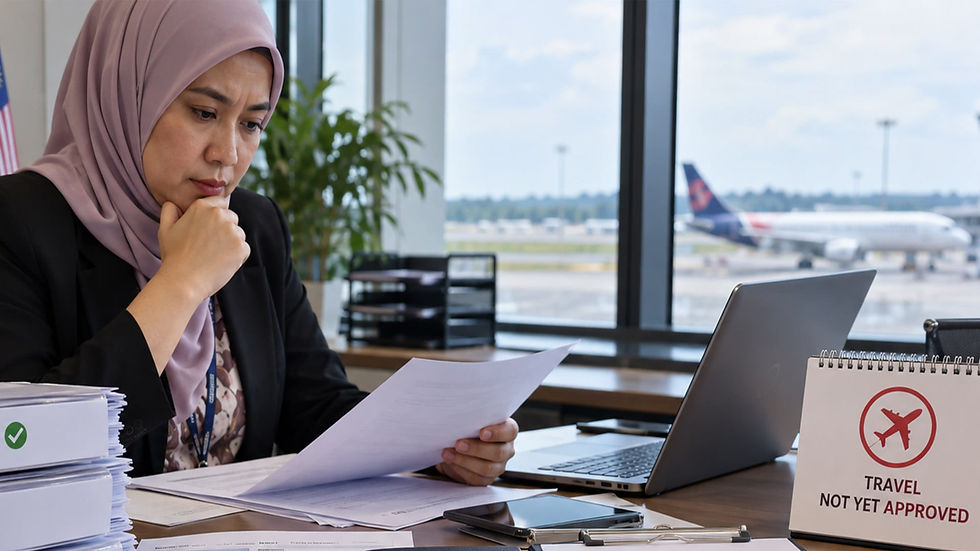
The Calling Visa (Visa Dengan Rujukan, VDR) is the central step in the foreign worker arrival process in Malaysia, because a worker needs it before they can legally travel.
The foreign worker arrival process in Malaysia does not begin at the airport. It begins with the employer completing several steps before a worker ever books a flight.
The VDR is applied for by the employer or licensed agency through FWCMS, and is only available after quota approval and levy payment are confirmed.
Once the eVDR is approved through FWCMS, the worker can proceed to collect a Single Entry Visa from the nearest Malaysian embassy or High Commission in their home country.
Workers must not travel to Malaysia before the Single Entry Visa is in hand. Arriving without it creates an immigration problem that cannot be fixed at the border.
Introduction
Quota approved. Levy paid. Worker identified. And yet the worker cannot book a flight.
That gap is where the Calling Visa comes in. It's easy to overlook until you're sitting at that exact point, wondering why nothing is moving. The Calling Visa authorises a specific worker to travel to Malaysia for a specific employer in a specific sector. Without it, no legal entry is possible. Even with it, there are still a few more things to clear before a flight can be booked.
This article explains the foreign worker arrival process in Malaysia as it applies specifically to the Calling Visa: what it is, what the foreign worker visa process looks like from the employer's side, and what causes delays before a worker can travel.
What Is the Calling Visa?
Officially, the Calling Visa goes by Visa Dengan Rujukan, or eVDR, inside the FWCMS portal. All three names refer to the same thing: a pre-entry approval from the Immigration Department of Malaysia that allows a foreign worker to enter the country for employment.
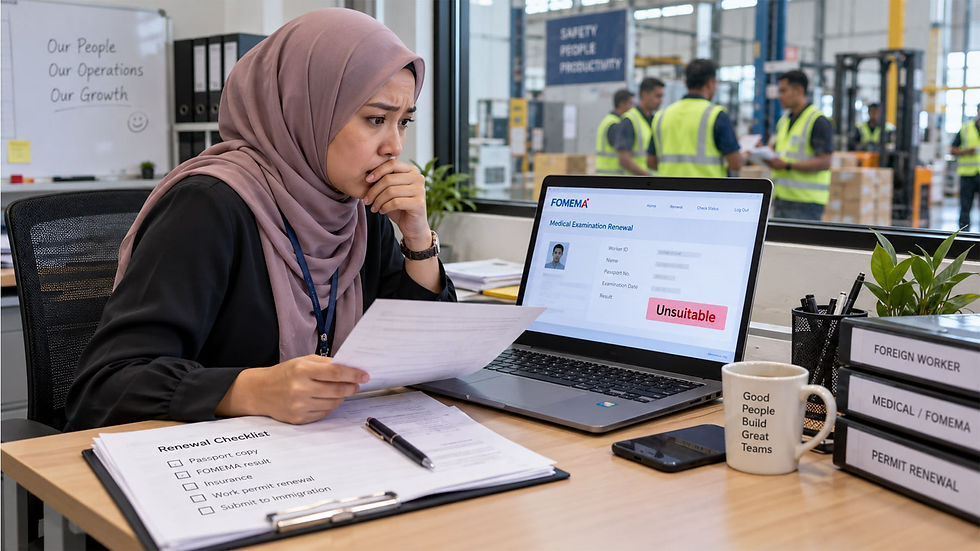
It is not the same as the PLKS work permit. Both documents are essential, but they serve different purposes and arrive at different stages of the foreign worker visa process. The VDR gets the worker into Malaysia. The PLKS lets them work once they have arrived and passed FOMEMA health screening. Each VDR is tied to a specific worker, employer, and sector. It cannot be transferred if any of those details change.
The Calling Visa is the gate between a completed hiring process and a worker's first day in Malaysia.
What Has to Happen Before the Calling Visa Is Issued?
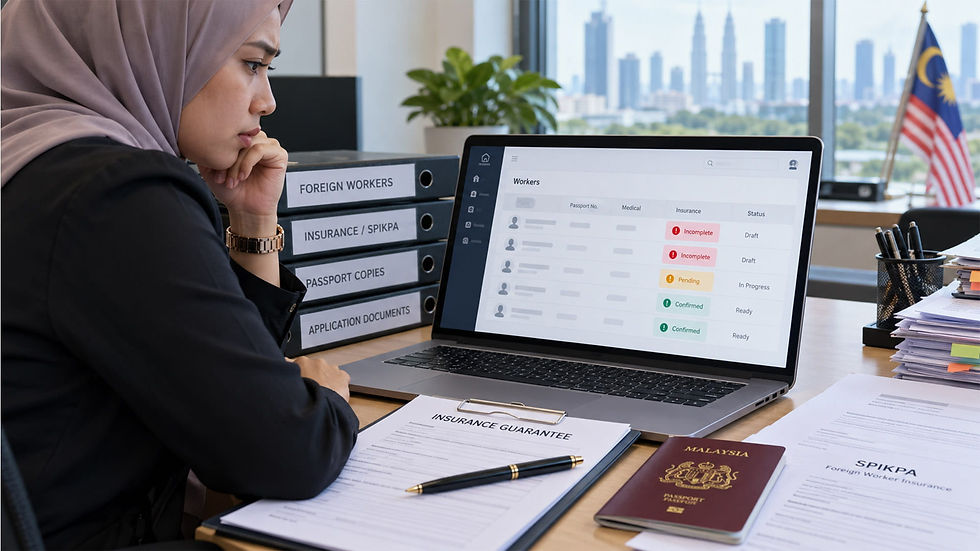
The foreign worker arrival process in Malaysia starts well before the VDR application is submitted. The employer must complete several steps first. None of them can be skipped, and the order matters for the foreign worker arrival process in Malaysia.
Section 60K Approval and eQuota
Every employer must first obtain approval under Section 60K of the Employment Act 1955 by advertising the role to Malaysians through MYFutureJobs before any foreign hire is permitted. After that, the employer applies for a foreign worker quota through the FWCMS eQuota system. Quota approval is what opens the path to the VDR.
Levy Payment
The employer pays the annual levy through FWCMS before the VDR is issued. In Peninsular Malaysia, that's RM1,850 per year for manufacturing, construction and services, and RM640 for plantation and agriculture. The levy must be confirmed in FWCMS before the Immigration Department will issue the eVDR approval.
Insurance and VDR Application
Two insurance policies must be active and confirmed in FWCMS before the eVDR can be issued: SPIKPA (Health Insurance Protection Scheme for Foreign Workers) and an Insurance Guarantee. Once quota, levy, and insurance are all confirmed, the employer or agency submits the eVDR application through the FWCMS system. When approved, the employer collects the eVDR document from the Immigration office, after which the worker can apply for a Single Entry Visa at the Malaysian embassy in their home country.
What Happens on the Worker's Side in Their Home Country?
Getting a worker ready to travel is not just an employer-side task. The pre-arrival foreign worker process extends into the source country too, and those steps need to be timed carefully.
Pre-Departure Medical and Employment Documents
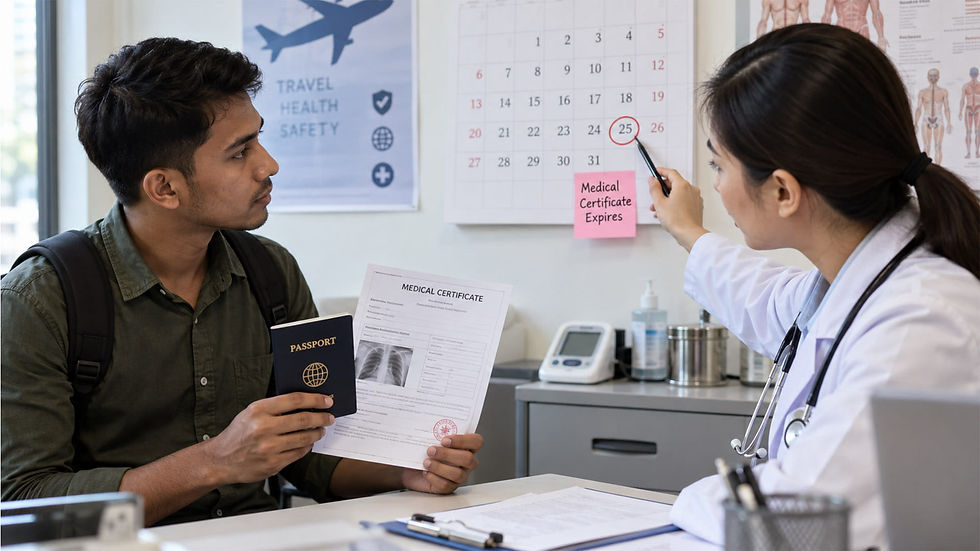
Workers undergo a medical examination at an accredited clinic in their home country, covering tuberculosis, hepatitis, HIV, syphilis, malaria, and general fitness. The medical certificate is valid for three months from issue and needs to remain valid through the travel date. This is separate from the FOMEMA screening that happens after arrival in Malaysia.
A Demand Letter and Employment Contract also need to be issued by the employer or agency. The Malaysian embassy requires both when the worker applies for a Single Entry Visa. Some source countries also require the contract to be attested by the High Commission before this step.
Single Entry Visa at the Malaysian Embassy
With the VDR approval and required documents in hand, the worker visits the nearest Malaysian embassy or High Commission to obtain a Single Entry Visa (SEV). The SEV is the stamp in the passport that authorises physical entry into Malaysia. The worker's passport must be valid for at least six months from the planned arrival date for this application to proceed.
The worker cannot board a flight to Malaysia until the Single Entry Visa is in their passport. The VDR alone is not enough. Missing this step means the worker arrives without legal authorisation to enter.
Are There Source Country Restrictions That Affect the Pre-Arrival Process?
Yes. Malaysia's approved source country list decides which nationalities can work in which sectors, and a few come with limits that shape the foreign worker visa process before it even starts. Under the general scheme, workers from the Philippines are limited to men, and Indian workers are limited to selected sectors.
The exact sector list for each nationality isn't always identical across official pages, and it can change over time. So confirm the current rules for your sector with the ministry handling your quota before you source a candidate. A VDR application for a nationality and sector combination that isn't allowed won't be approved, however complete the rest of the paperwork is.
What Causes Delays in the Foreign Worker Arrival Process in Malaysia?
Delays in hiring foreign workers in Malaysia can build up at a few predictable points:
Incomplete Insurance in FWCMS
If SPIKPA or the Insurance Guarantee is not confirmed in the system, the eVDR cannot be issued.
Pre-Departure Medical Timing
A medical certificate that expires before travel forces a repeat examination in the source country.
Embassy Appointment Backlogs
Single Entry Visa appointments at the nearest Malaysian embassy vary significantly by country and season.
Source Country Sending Authority Approval
Nepal, Bangladesh, and Indonesia each require their own government body to sign off on outbound worker deployment. This adds a step between the employer's eVDR approval and the worker's departure, and it's easy to leave out of the plan.
Passport Validity
A worker whose passport expires within six months of the intended travel date will be turned away at the Malaysian embassy. No Single Entry Visa will be issued.
Frequently Asked Questions
1. What is the Calling Visa and why does a foreign worker need it before travelling to Malaysia?
The Calling Visa (VDR) is the Immigration Department's pre-entry approval confirming that the employer's quota, levy, and insurance are all in place for a specific worker. Without it, the worker cannot legally enter Malaysia for employment. With the VDR in place, the employer's pre-travel obligations are done, and the worker's own preparation can begin.
2. How long does the Calling Visa take to process, and what happens after it is approved?
Timelines vary depending on quota status, documentation completeness, and the Immigration office handling the case. Once the FWCMS application is approved and the eVDR document is collected, the worker proceeds to apply for a Single Entry Visa at the nearest Malaysian embassy or High Commission in their home country. If the approval lapses before the worker travels, the employer needs to reapply.
3. Can a worker travel to Malaysia as soon as the Calling Visa is approved?
No. The Calling Visa approval is an employer-side document. The worker still needs a Single Entry Visa from the Malaysian embassy in their home country, a completed pre-departure medical, and a signed employment contract before they can legally board a flight. Travelling before the Single Entry Visa is in the passport creates an immigration problem that cannot be resolved at the border.
4. What source country restrictions apply when hiring foreign workers in Malaysia before the Calling Visa is issued?
Some nationalities can only work in certain sectors. Workers from the Philippines under the general scheme must be men, and Indian workers are limited to selected sectors. Because the detailed lists can change, check your sector's current rules before applying. A VDR application for a combination that isn't allowed is rejected, regardless of how complete the other documents are.
5. What can stall the pre-arrival foreign worker process between VDR approval and arrival in Malaysia?
A few things can hold it up. Embassy appointment waits for the Single Entry Visa vary by country and season. A medical certificate that expires before travel means a repeat examination. And sending authorities in places like Nepal, Bangladesh, and Indonesia add their own sign-off step. So build a buffer between eVDR approval and the planned arrival date, and ask for current embassy waiting times in the worker's home country.
So what happens before a worker travels to Malaysia? On your side, quota, levy, and insurance all need to be in place before the Calling Visa can be issued. On the worker's side, the medical check, the contract, and the Single Entry Visa follow in their home country. Each step leans on the one before it, so timing matters as much as paperwork. Planning an intake? Talk to UMR's foreign worker recruitment team about how the foreign worker arrival process in Malaysia fits your hiring timeline.


.png)
Comments