
Foreign Worker Accommodation in Malaysia: What Employers Must Get Right
Key Takeaway
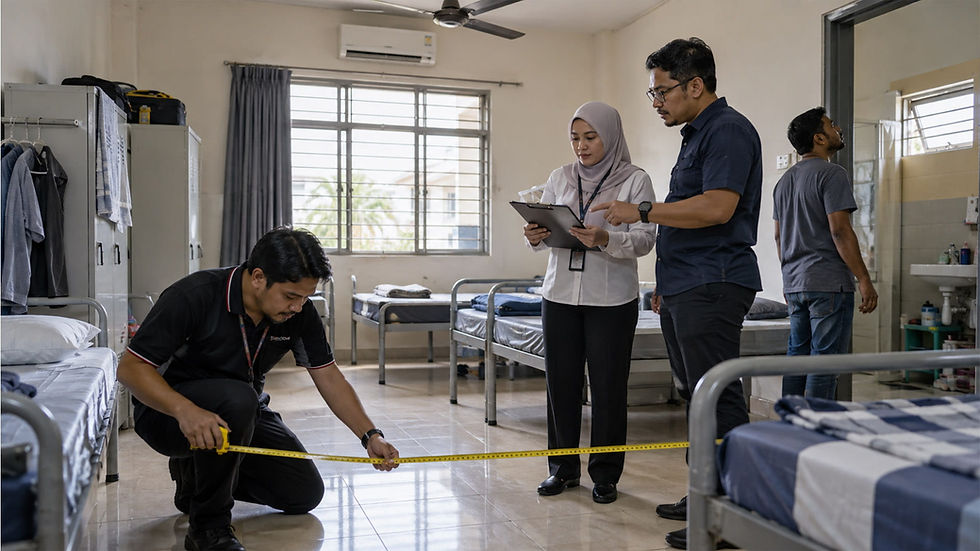
Foreign worker accommodation requirements in Malaysia come from Act 446 and its 2020 regulations, and they apply in Peninsular Malaysia and Labuan only.
Choosing a dormitory or a house with bedrooms changes your space target from 3 square metres per worker to 3.6.
Bathroom numbers move with that choice too, with one for every 15 workers in a dormitory against one for every six in a room-based home.
Each worker gets their own bed and bedding, plus a lockable cupboard big enough for a passport that they can open whenever they like.
Rent deductions have a monthly ceiling, and using an outside hostel operator still leaves you with a 30-day reporting duty.
Introduction
Finding somewhere for new workers to live can feel like the easy part of hiring. Rent a house, buy some beds, done. Malaysian law sees it a little differently, and it comes with a measuring tape.
The rules sit in regulations made under Act 446, the Employees' Minimum Standards of Housing, Accommodations and Amenities Act 1990. They set exact figures, right down to the height of a worker's locker. So foreign worker accommodation requirements in Malaysia depend a lot on your building and your contract.
If you're planning a fresh intake through foreign worker recruitment, these details are best read before you sign a lease. Picking the right building first saves you from reworking one later.
Do You Actually Have to House Your Foreign Workers?
For local staff, the law doesn't make it compulsory. Foreign workers are a different story. A 2021 regulation requires employers to provide accommodation for workers on a Temporary Employment Visit Pass. Domestic helpers are the one group left out.
Where your site sits matters as well. Act 446 applies only in Peninsular Malaysia and the Federal Territory of Labuan. Is your team based in Sabah or Sarawak? Then the Act doesn't cover them, so check the state rules there.
The Act also uses two words that sound alike but mean different things. "Housing" refers to buildings on estates and mines outside city and municipal council areas. "Accommodation" covers workers in every other sector. So if you run a factory, a warehouse or a building site, you're dealing with accommodation. Every unit then needs a Certificate for Accommodation, which is the official approval showing the premises meet the standards.
Under Act 446, the minimum standard for foreign worker housing isn't one fixed number. It changes with the type of building you choose.
How Does Your Choice of Building Change the Rules?
This is where the employer accommodation requirements start shaping your floor plan. The accommodation regulations sort worker housing into two classes, and each one comes with its own maths.
Requirement | Dormitory | House with bedrooms |
Minimum floor area per worker | 3 sq m of sleeping area | 3.6 sq m of bedroom space |
Bathroom and toilet ratio | 1 for every 15 workers | 1 for every 6 workers |
Shared spaces | Rest, dining, kitchen and clothes-drying areas | Same |
Basic fittings | Fans, lamps, a first aid kit and a dustbin | Same |
Here's how that plays out with 30 workers. Put them in a dormitory, and you need at least 90 square metres of sleeping area plus two bathroom-toilet units. Spread the same 30 people across bedrooms, and the minimum climbs to 108 square metres and five units.
That's a big jump in bathrooms. A house can look roomy during a viewing and still fall short once you count heads.
The building also needs the right approvals behind it. In December 2020, officers inspected one hostel in Johor. They found 321 workers living in a former factory with no certificate and no council approval. Plenty of floor space won't rescue a building that was never approved for people to live in.
What Does Each Worker Need to Keep to Themselves?
Sharing a kitchen is fine. Sharing a bed isn't. The same regulations list a handful of items every worker gets for their own use.
What Makes a Bed Compliant?
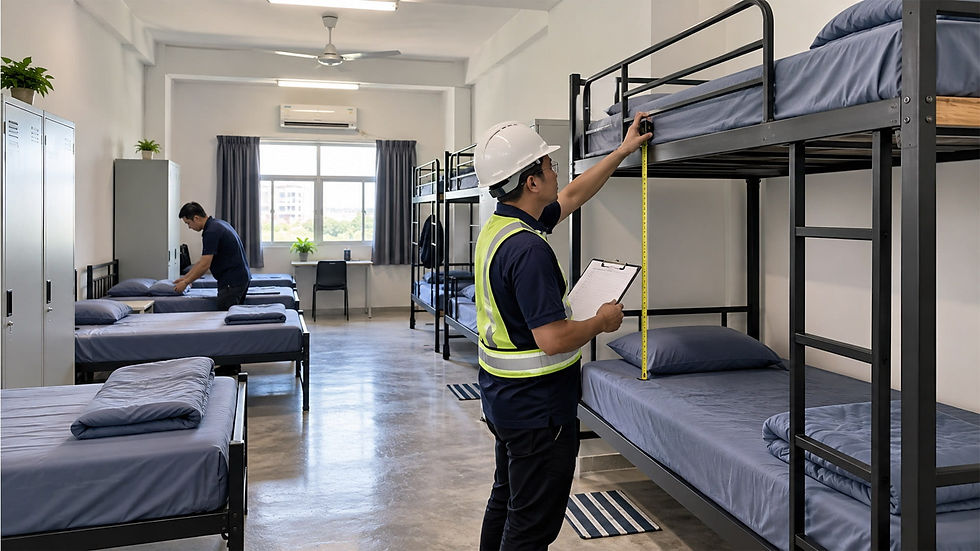
Each worker needs a single bed of at least 1.7 square metres. Bunk beds are allowed, as long as there's at least 0.7 metres between the top and bottom levels. The mattress must be at least 4 inches thick. It also comes with a pillow and a blanket.
Why Does the Locker Matter So Much?
The locker is the item that's easiest to forget. It must be at least 0.35 metres wide and deep, and 0.9 metres tall. It also needs a lock and enough room for valuables, including the worker's passport. And the worker must be able to open it at any time.
That last point deserves a pause. The rule names the passport directly. So workers keep their own documents within reach, even in a building the employer controls. Water and electricity supply are required too, whichever class of building you use.
Space in a worker hostel in Malaysia is counted per person, so squeezing in one extra worker can tip a compliant room into an offence.
How Much Can You Charge for Foreign Worker Housing?
Yes, you can charge rent, but there's a ceiling. Official guidance caps accommodation charges at RM150 a month, or the amount agreed in the employment contract. You can recover it through salary deductions.
Here's the catch. If the contract says housing is free, you can't start charging for it later. In other words, the housing clause you write today decides what you can recover for the whole contract. So that one line deserves a careful read before anyone signs. Housing is also just one line in the wider cost of hiring a foreign worker.
Does an Outside Hostel Operator Take the Pressure Off?
You can also place workers in a worker hostel in Malaysia run by an outside operator. The law calls this operator a centralised accommodation provider. In plain terms, that's anyone who runs housing for one or more employers.
It helps, but it doesn't hand over everything. The operator needs its own Certificate for Accommodation. Your own duties as the employer carry on, however. Under the Act, you still have to tell the labour department within 30 days once your workers move in. That applies whether the building is yours or the operator's. Missing that report can lead to a fine of up to RM10,000 for each offence.
Before you sign with an operator, ask to see its certificate. Then check that it covers the exact building your team will live in.
What Happens If You Skip the Certificate?
Housing workers without a Certificate for Accommodation is an offence under Section 24D of Act 446. On conviction, an employer can be fined up to RM50,000 for each offence. A hostel operator without a certificate faces the same fine, a jail term of up to a year, or both.
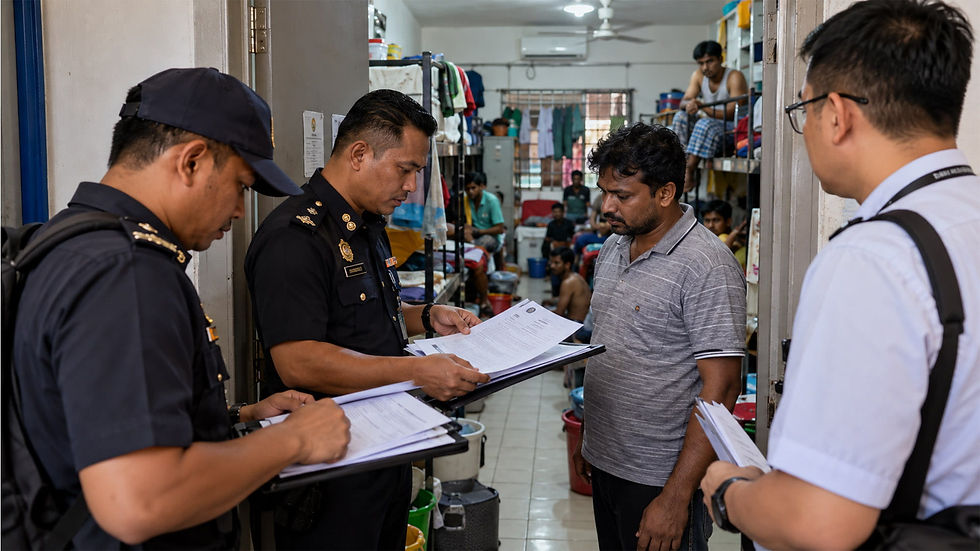
And inspections do happen. In one late-2020 operation, officers checked about 24,000 employers and found only around 30% complying with Act 446. They also found an 800-square-foot unit meant for six people housing 20.
Frequently Asked Questions
1. What's the first thing to get right under foreign worker accommodation requirements in Malaysia?
Start with the Certificate for Accommodation for the exact building you plan to use. The paperwork depends on how you hold that building. Renting? Then the official application checklist asks for the tenancy agreement and any council approval. That could be permission to turn a warehouse into a hostel, for example. A condo or other strata unit also needs a letter from the building's management body.
2. Can employers deduct utility bills or furniture costs from workers' wages?
No. The allowed deduction covers rent or accommodation charges only. Other facilities at the accommodation stay the employer's responsibility, so they can't come out of anyone's salary.
3. Can male and female workers live in the same hostel?
Not without separate accommodation for each. Failing to provide separate accommodation for men and women is an offence under Section 24J. If your intake includes both, plan for two sets of living quarters from the start.
4. Do workers moving to a new hostel need a fresh 30-day report?
The reporting duty runs from the date workers are placed in accommodation. So the safest approach is to treat every move as a new 30-day window. For a brand-new intake, plan this report alongside the rest of the worker arrival process. Keeping a simple list of who lives where makes each report quick to prepare.
5. Do plantation estates follow the same accommodation rules?
Not exactly. The accommodation rules in the Act don't apply to estate workers, so estate housing follows a separate set of rules. Employers need their building plans approved before any work starts. They also can't charge estate workers any rent for that housing.
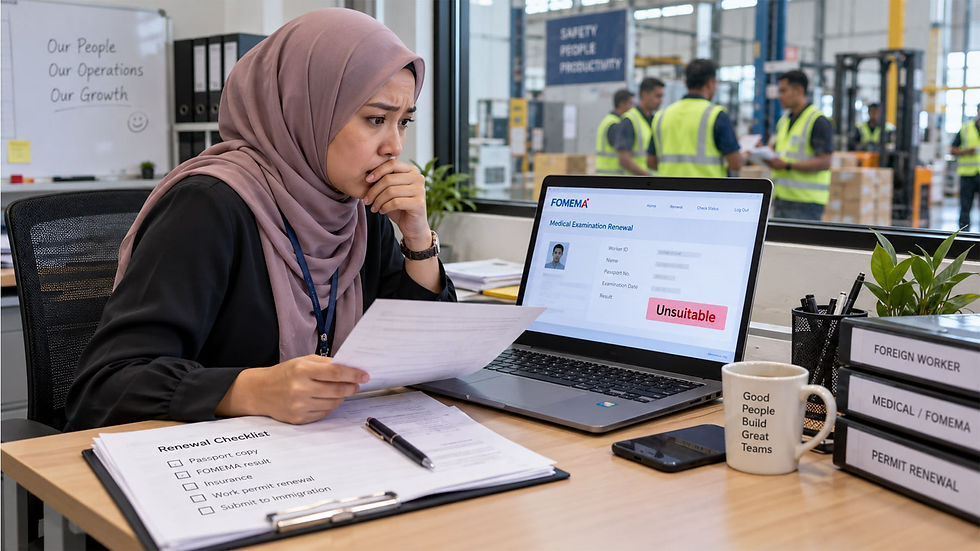
So what do employers need to get right? Start with the building class, because it sets your space and bathroom numbers before a single bed arrives. Next, write the housing clause in your contracts with care, since it fixes what you can charge for the whole job. If you use an outside hostel, check its certificate and keep your own 30-day reports on track. Sort those out early, and foreign worker accommodation requirements in Malaysia become part of your plan rather than a rush before an inspection. If a new intake is coming up, talk to UMR's licensed foreign worker agency team about the workers you're planning to bring in.


.png)
Comments